THRUST Project Meeting in Catania
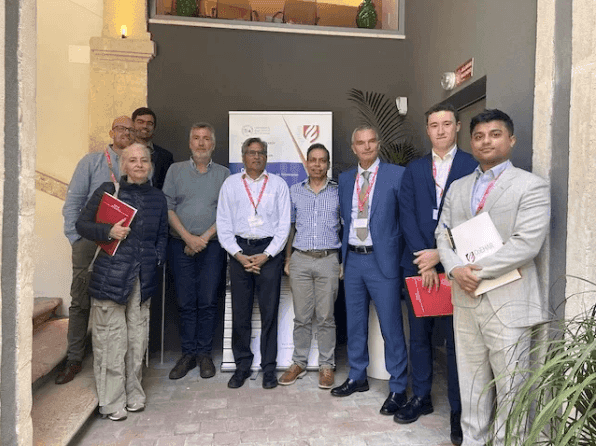
Our General Manager Dr. Max Scherer and Technical Director Dr. Nikola Pluym attended another international meeting in Catania, hosted by CoEHAR dedicated to smoking harm reduction projects.
"THRUST," a clinical study developed together with CoEHAR expert, aims to assess smoking-related respiratory endpoints through innovative tools and analysis of novel biomarkers.
"To improve our understanding of how smoking affects lung health," Prof. Polosa explained, "we want to use high-resolution computed tomography (HRCT) combined with artificial intelligence tools. In this way we will be able to distinguish lung health status between smokers, former smokers and individuals who have never smoked."
THRUST Study
The study is recruiting a cohort of 180 healthy volunteers (60 smokers, 60 former smokers and 60 never smokers) to refine the methodology before expanding the study sample size. Over the course of a year, the research team will use specialized AI tools to assess lung density, structure characteristics and airway measurements through HRCT scans.
The primary goal of the research is to establish a reliable quantitative analysis of lung microstructure, ensuring the repeatability of these measurements. In this innovative approach, secondary objectives include performing a series of cardiorespiratory tests and collecting biological samples to identify novel biomarkers of potential harm (BoPH).
Biomarkers of exposure to verify compliance
Unique in this cross-sectional study is that the subjects’ smoking and nicotine product use history is robustly verified by means of a panel of specific biomarkers of exposure (BoE) ensuring compliance.
A key component of the study is the correlation of HRCT parameters identified by AI with other cardiorespiratory indicators such as spirometry results, oscillometry, tests that assess gas exchange in the lungs as well as BoPHs.
"This testifies," Polosa continues, "to the synergistic potential of advanced medical imaging, artificial intelligence, and multidisciplinary research in understanding and ultimately reducing tobacco-related harms.”
Biomarkers of potential harm (BoPH)
Biomarkers of potential harm (BoPH) are endogenous metabolites showing alterations in their concentrations due to altered metabolism. The Institute of Medicine defined BoPH as follows: „…measurement of an effect due to exposure; these include early biological effects, alterations in morphology, structure, or function, and clinical symptoms consistent with harm; also includes ‘preclinical changes’”. The study will add important data to the field of BoPH in order to identify such biomarkers of early biological effects in terms of respiratory diseases. BoPH have the potential to predict an outcome related to product use in an early stage without the necessity to wait for epidemiological data for decades.
The study is currently being conducted at ASPH NHS hospital under the lead of Dr. Isaac John (Metanoic Health) in the United Kingdom, with participation of several CoEHAR members and ABF evaluating the data together with the biostatistician Dr. Jonathan Belsey (JB Medical). The countries involved in this multi-national study are Italy, the United Kingdom and Germany.
Check our LinkedIn Company Profile for recent updates.