Research Insights
April 11, 2024
Analysis of NNN in plasma superior to urine measurement to quantify the product-use specific exposure
The NNN story
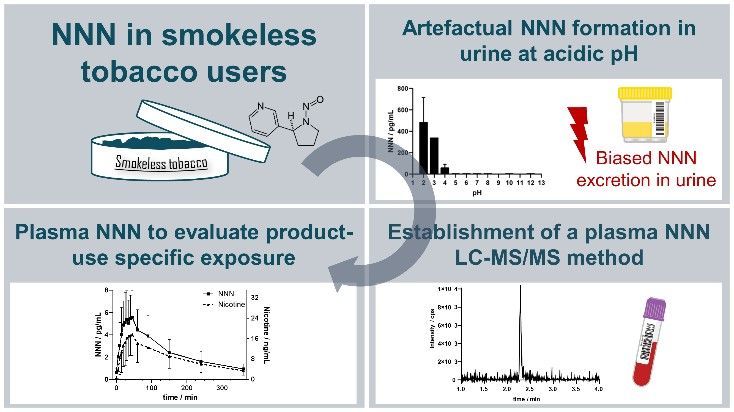
N-Nitrosonornicotine (NNN) is a human carcinogen present in cigarette smoke and smokeless tobacco, which is why it is also listed as one of 93 harmful and potentially harmful constituents (HPHC) in tobacco products and tobacco smoke. While NNN is routinely determined in tobacco products and smoke, the exposure to NNN from the product can only be assessed accurately via biomarkers of exposure. For that purpose, the analysis of NNN in urine has been established many years ago. So, the story is told already? Well..., no! The Hecht lab demonstrated the possible formation of NNN from nicotine and nornicotine at acidic pH which prompted us to perform a study to better understand the key components of this formation and how this could be avoided to accurately assess the exposure to NNN specifically coming from the product use. The concern with urine is that the pH may vary depending on dietary and other factors. We performed incubation experiments in urine at varying pHs and differing concentrations of nornicotine and nitrate/nitrite shwoing that below pH 6 in presence of nornicotine and nitrite/nitrate at physiological levels rapidly forms NNN. While urine pH is variable, this is not the case for blood which is very stable at a pH of 7.37 to 7.43!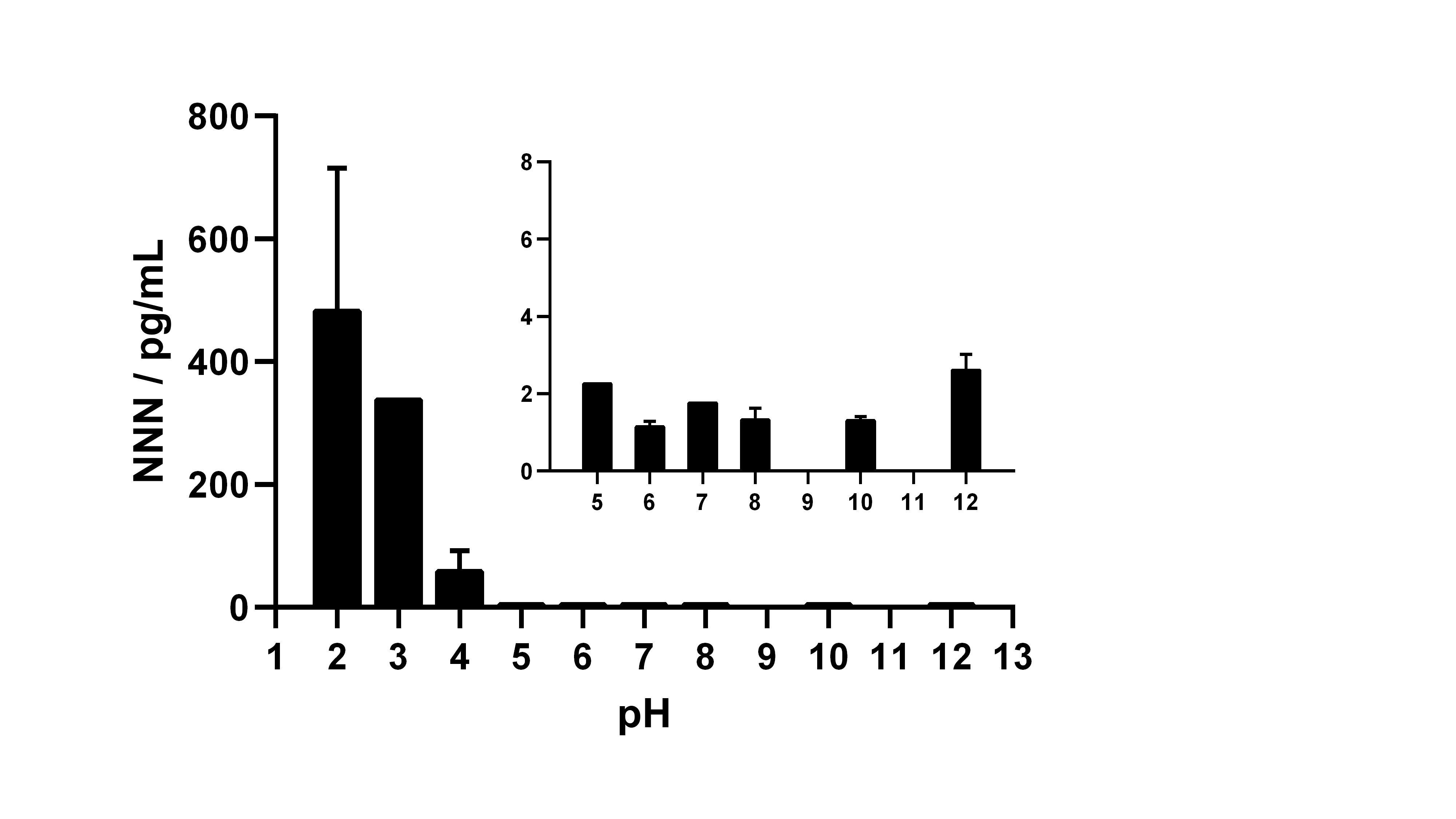
Plasma LC-MS/MS Assay for NNN
While urine has been the matrix of choice for assessing NNN exposure, its reliability is now in question. Our research suggests that plasma may offer a more accurate reflection of NNN uptake, as it is less affected by the artefactual formation of this carcinogen. We have developed a cutting-edge LC-MS/MS method to measure NNN in plasma, providing a new pathway to assess the pharmacokinetics of NNN in comparison to nicotine. Key Findings Reveal the Advantages of Plasma NNN Analysis The study highlights the importance of considering artefactual NNN formation in urine analysis and presents a robust method for NNN quantification in plasma. The significance of maintaining a stable pH, as given in blood, to inhibit the artefactual formation of NNN which may occur in urine is key to assess the use-specific exposure to NNN. Plasma NNN is more reliable as a biomarker for product-specific exposure, providing valuable insights into the risk assessment of tobacco products. This is supported by the direct correlation between nicotine and NNN PK. NNN: an old hat newly explored Understanding the intricacies of tobacco exposure assessment is crucial for both consumers and regulators. Our full study, now available as open access publication, offers a detailed exploration of these findings and their implications for risk assessment and product safety.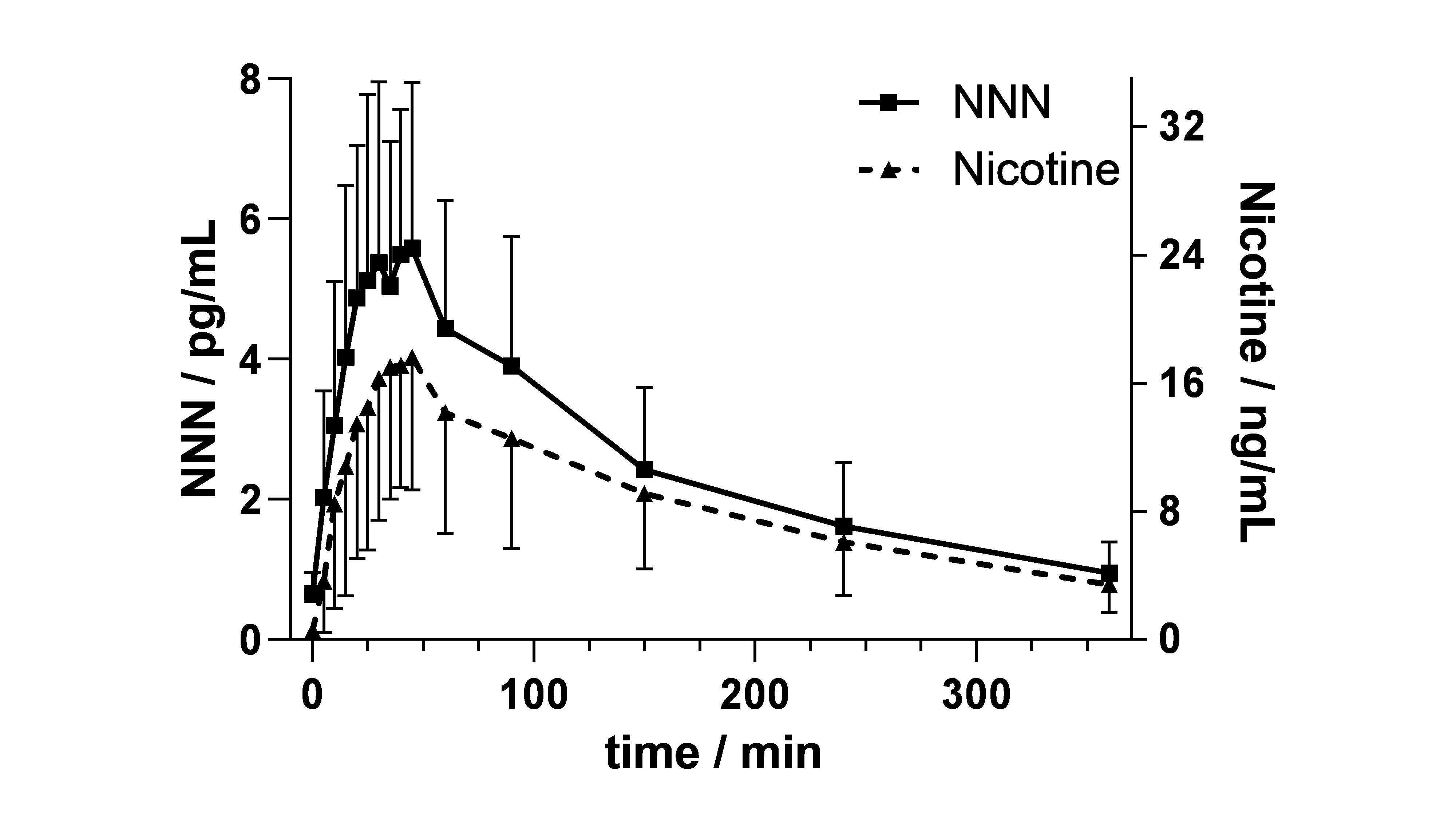
Want to include plasma NNN into your clinical study?
Request a quote: