Exploring the human exposome
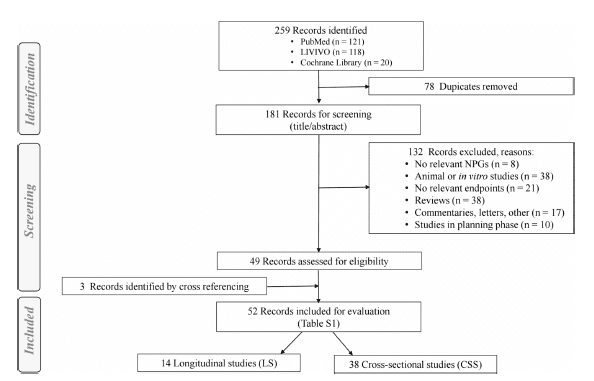
We are exposed to thousands of chemicals every day through air, water, food, and consumer goods. Exposure to chemicals of concern is routinely assessed by targeted (= quantitative) analytical methods based on either GC-MS or LC-MS/MS. Mass spectrometry offers high sensitivity and specificity. However, quantitative methods can only analyze the targeted compounds of interest. Today, more than 800,000 chemicals are used worldwide, of which at least 5,000 pose health concerns.
Non-targeted MS analysis
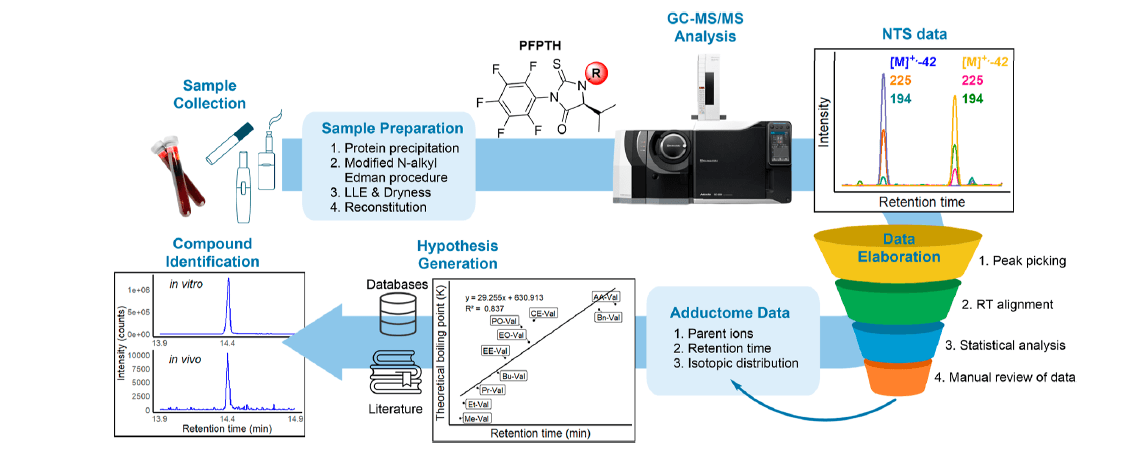
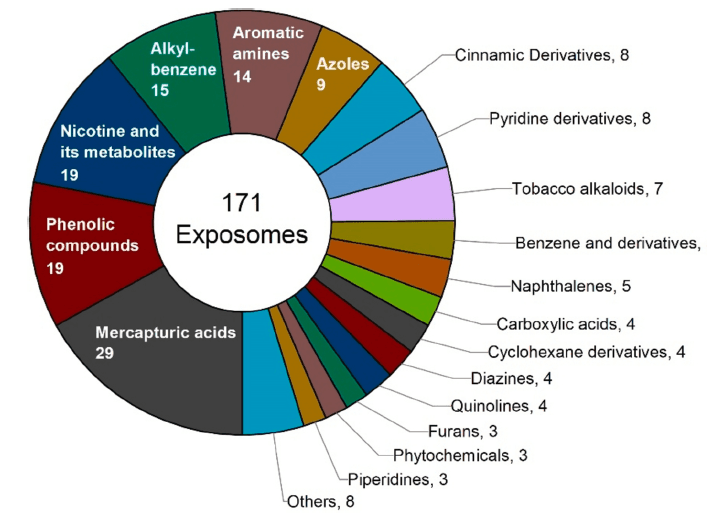
Evidently, a holistic methodology is needed to detect all exposures, the so-called exposome, to which humans are subjected. Non-targeted mass spectrometry analysis is now regarded as the gold standard for unraveling the human exposome. ABF has recently developed non-targeted analysis (NTA) methods for urine/plasma (exposomics), exhaled breath (breathomics) and hemoglobin adducts (adductomics). A first application comprised a clinical study with users of different nicotine products such as electronic cigarettes, heated tobacco products, oral nicotine products (snus) and combustible cigarettes as a comparator to decipher the use-specific exposome and identify new biomarkers of exposure.
Future applications of NTA methods
The NTA methods and the established specific biomarkers can be used in future clinical studies in order to
A) monitor product use to verify the users’ compliance in longitudinal cohort studies
B) assess the absolute risk to users associated with the exposure to these products
But the NTA methods are not restricted to one research question, but can be applied, for example, in human biomonitoring to investigate exposure to toxic chemicals that have been missed by the classical approach using targeted methods.
You can find our latest publications in the field of non-targeted analysis here: