Research Insights
July 1, 2025
Unveiling the Hidden Insights of Wastewater-Based Epidemiology for Monitoring Tobacco & Nicotine Product Use on a Population Level
Wastewater-based epidemiology (WBE) provides an innovative lens through which we can assess the consumption of various substances in a population by analyzing biomarkers found in wastewater. This approach, which involves collecting samples at the inlet of wastewater treatment plants, offers a non-invasive and comprehensive method to understand community-level substance use. From caffeine and alcohol to nicotine, WBE has been applied globally, proving invaluable for public health and regulatory initiatives. Now, this methodology is poised to revolutionize our understanding of conventional and new generation tobacco and nicotine products, offering crucial insights for tobacco harm reduction strategies.
The methodological foundation of WBE lies in the detection of specific biomarkers within wastewater samples, which serve as indicators of substance use. In the realm of tobacco and nicotine assessment, cotinine, a primary metabolite of nicotine, takes center stage. Studies utilizing cotinine have unveiled varied nicotine consumption rates across regions, underscoring the method's sensitivity to geographic and cultural differences. This ability to back-calculate mean nicotine consumption from wastewater data provides a window into population-level usage patterns. However, the presence of cotinine in non-tobacco sources calls for the identification of more specific biomarkers to enhance the accuracy of tobacco use monitoring.
In the application of WBE to tobacco and nicotine products, cotinine remains a widely used biomarker due to its role as a major nicotine metabolite. Yet, its presence in non-tobacco products can blur the lines, necessitating a nuanced interpretation of the data. Anabasine, a minor tobacco alkaloid, enables the differentiation between tobacco and non-tobacco sources of nicotine, offering a clearer picture of tobacco consumption. Meanwhile, 2CyEMA, indicative of acrylonitrile exposure, acts as a precise indicator of combustible cigarette use.
Long-term WBE studies reveal mostly stable or declining trends in nicotine consumption, often attributed to successful tobacco control efforts. The ratio of anabasine to cotinine and 2CyEMA to cotinine in wastewater samples can monitor shifts in tobacco use habits, highlighting transitions from traditional cigarettes to newer nicotine products like electronic cigarettes (ECs). Monte Carlo simulations were performed to model concentrations of cotinine, anabasine, and 2CyEMA over time. These simulations shed light on the transitions between different nicotine/tobacco products and non-users, thereby aiding in the assessment of tobacco harm reduction (THR) measures.
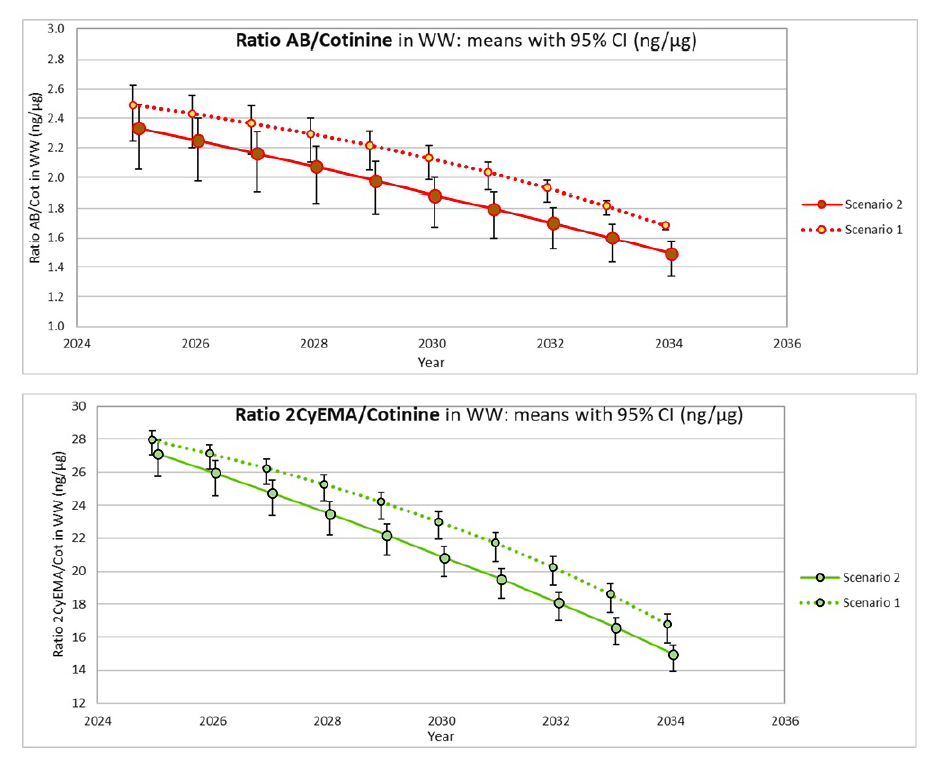
Wastewater-based epidemiology emerges as a formidable tool for evaluating the impact of tobacco harm reduction strategies. By leveraging specific biomarkers like anabasine and 2CyEMA, alongside biomarker ratio analysis, WBE offers insights into the shift from conventional tobacco products to new generation nicotine alternatives. This approach not only supports the evaluation of tobacco control measures' efficacy but also enhances our understanding of population-level changes in nicotine consumption habits. Ultimately, this contributes to public health improvements by providing a clearer picture of how tobacco harm reduction strategies are shaping nicotine use trends.
In conclusion, the potential of wastewater-based epidemiology in assessing tobacco and nicotine product use is vast and transformative. By offering a non-invasive, population-level assessment tool, WBE allows us to monitor and understand substance use trends more accurately. This understanding is crucial for guiding effective public health policies and regulatory measures aimed at reducing the harm associated with tobacco and nicotine consumption. Our review highlights the great potential of WBE in monitoring nicotine product use prevalence on a population level.
For more information, you can find our recent review "Wastewater-Based Epidemiology (WBE): Potential Application for Assessing the Use of Conventional and New Generation Tobacco and Nicotine Products" here: